


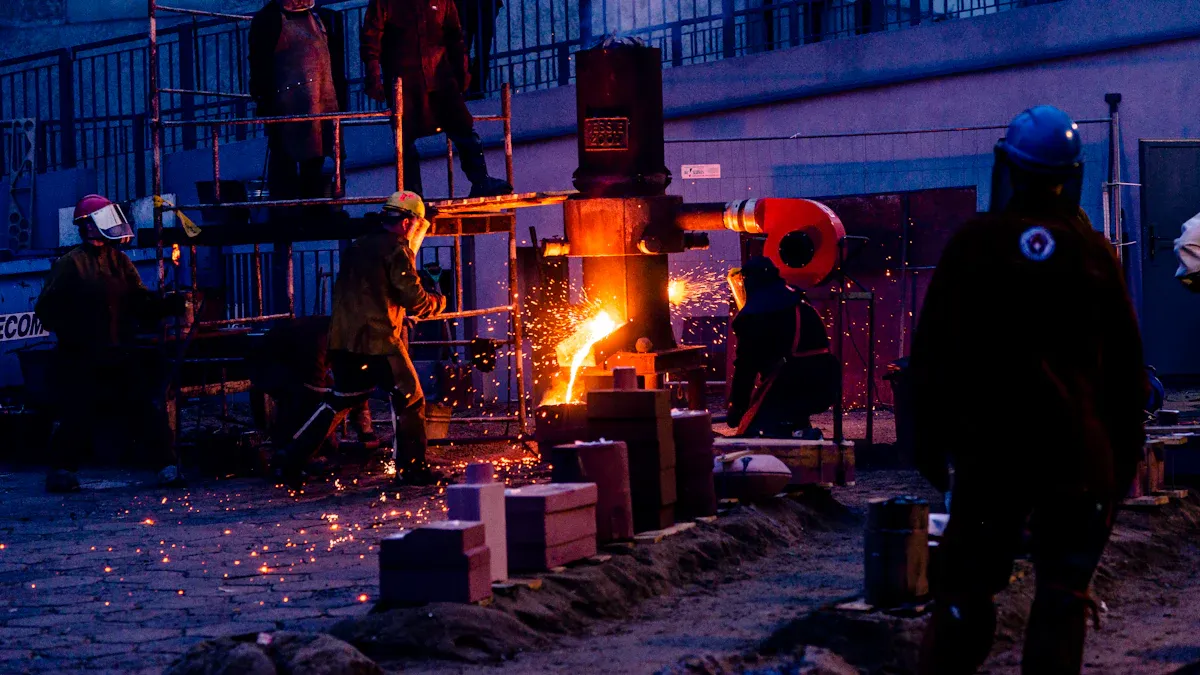
 I understand Industrial Block Forging shapes robust metal parts. This process is key for many industries. Buyers need to know its importance. It directly affects the strength and lifespan of your final products. I aim to help you make informed decisions. You must select the right Forging Mould Block for your project. Finding a top 10 Hot Mould Forging Blocks Factory ensures high quality. Consider Custom CNC Aluminum Block Forgings for specialized needs. Making informed forging procurement decisions guarantees excellent components.
Key Takeaways
- Industrial block forging makes metal parts very strong and durable. It uses force to shape metal, which improves its internal structure.
- There are two main types: open die forging for large, custom parts and closed die forging for precise, high-volume parts. Each type has different benefits for buyers.
- Choosing the right material and ensuring strict quality control are very important. These steps make sure your forged parts meet high standards and perform well.
- Consider the total value, not just the initial cost. Stronger forged parts can save money over time by lasting longer and reducing repairs.
- Pick a forging partner with good experience, strong production ability, and proper certifications. Clear communication and support from your supplier are also key.
What is Industrial Block Forging?
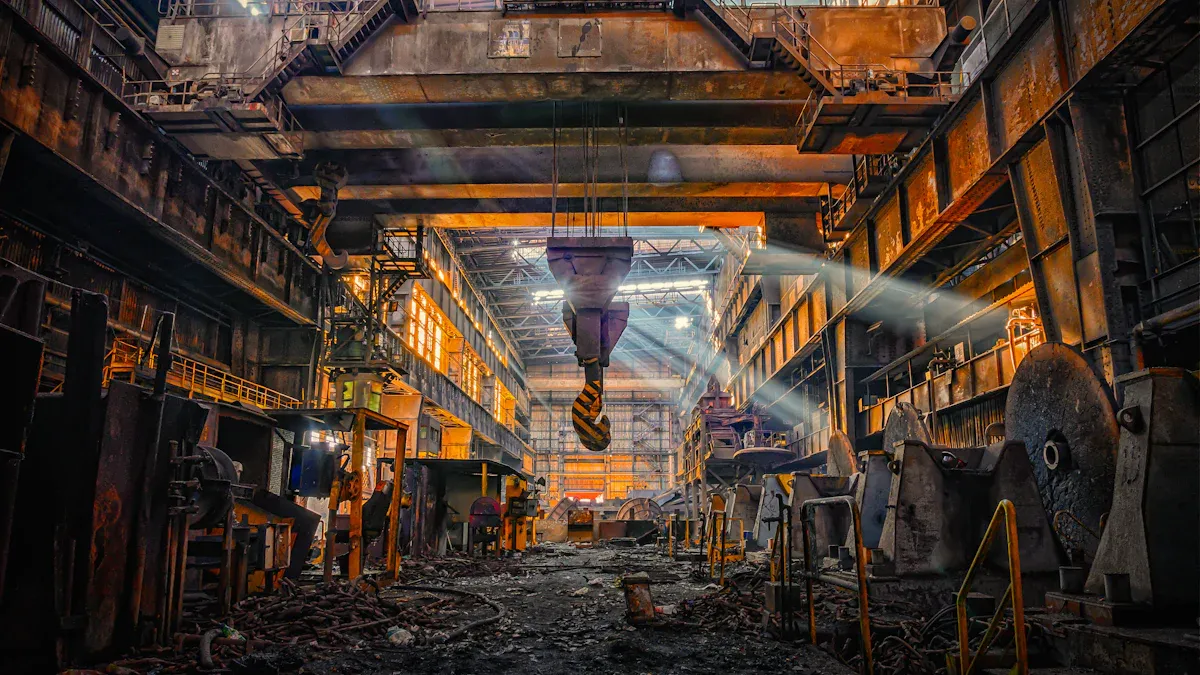
I want to explain what industrial block forging is. It is a powerful way to shape metal. This process uses force to change a metal block’s shape. It makes the metal stronger and more durable. I find it fascinating how a simple block of metal can become a vital part of a machine.
Defining the Industrial Block Forging Process
Industrial block forging is a manufacturing method. It involves heating a metal block and then shaping it with powerful tools. Think of it like a blacksmith hammering hot metal, but on a much bigger scale. There are two main ways we do this: open die forging and closed die forging.
Here are the fundamental steps involved in these processes:
- Open Die Block Forging (Smith Forging):
- First, we super-heat a block of steel. It gets very hot!
- Then, we hammer the heated block on a stationary anvil.
- We reposition the block often to get the shape we want. The dies, or tools, do not completely surround the block in this method.
- Closed Die Block Forging (Impression Die Forging):
- We place a hot metal block into a mold-like metal die. This die completely surrounds the block.
- We hammer the metal many times with quick strikes. This makes the metal flow into the die’s shape.
- We might rework the block, sometimes many times. We use dies that get more complex to fine-tune the design and reach the final shape.
Key Characteristics of Block Forging
Block forging has some special features. It uses high pressure to shape the metal. This pressure changes the metal’s internal structure. It makes the metal’s grain flow in a certain direction. This grain flow is important for strength. The process also makes the metal very dense. There are no air pockets or weak spots inside. This means the final part is very solid and reliable. I see this as a key reason why many industries choose forged parts.
Advantages of Industrial Block Forging
I believe industrial block forging offers many benefits. It makes metal parts incredibly strong. This strength comes from how the metal’s grain structure gets aligned. When we forge a block, we orient its grain structure properly. This is especially true for open die forging.
Forged blocks offer superior impact strength. They can handle sudden, strong hits without breaking. They also have high resistance to wear and tear. Plus, they show great ductility. This means they can bend or stretch a bit before breaking. These advantages come from the forging process itself. They also come from using good quality raw materials. When you need a reliable industrial forging solution, block forging is often the answer.
Open Die Industrial Block Forging
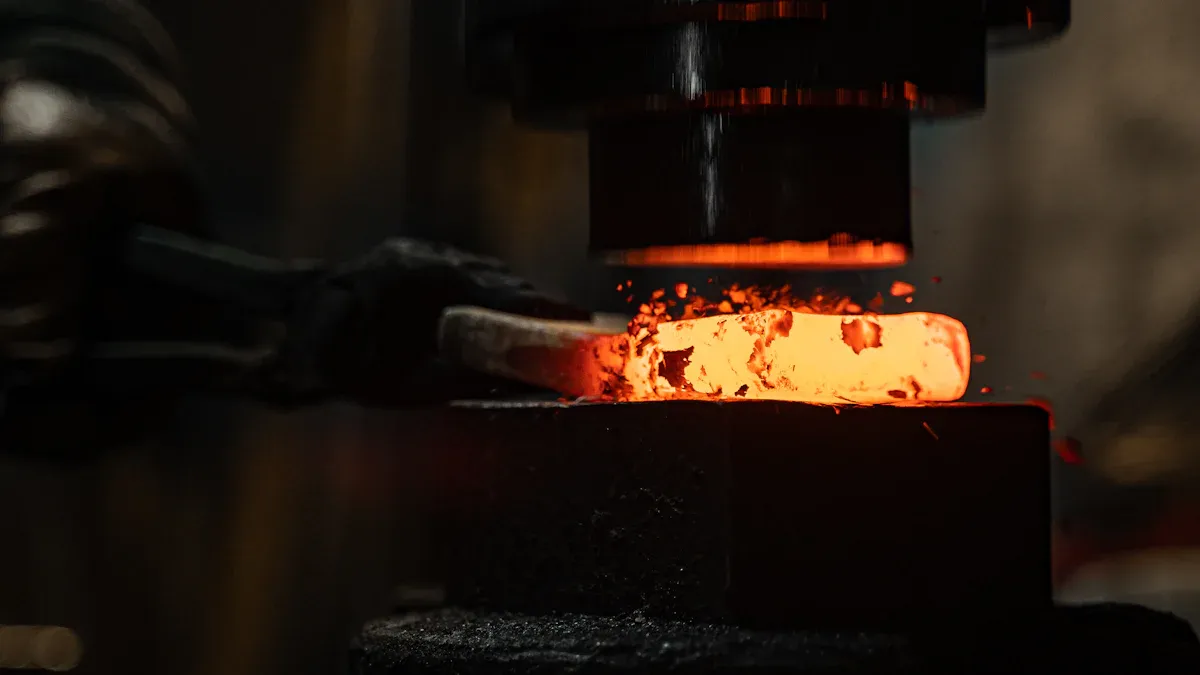
The Open Die Forging Process
I want to tell you about open die forging. This process is like a giant blacksmith at work. We start with a metal block, often very large. We heat this block until it glows red-hot. Then, we place it between two flat dies. These dies do not fully enclose the metal. Instead, they press and shape the metal with powerful, repeated blows. We constantly turn and move the metal block. This allows us to shape it into many different forms. It is a flexible way to create custom parts.
Benefits for Buyers
I see many benefits for buyers who choose open die forging. First, it is great for making very large or heavy parts. Think of huge shafts or rings. This method also improves the metal’s internal structure. It makes the part stronger and more durable. This means your components will last longer. Another big plus is cost. We do not need expensive custom dies for every shape. This makes it a good choice for small orders or unique designs. You can get prototypes quickly too. This flexibility saves you time and money.
Common Applications
I often see open die forging used in many important industries. It is perfect for making large shafts for power plants or ships. We also use it for heavy-duty rings and discs. These parts go into machinery that needs to be super strong. For example, the oil and gas industry uses these forged blocks. Aerospace companies also rely on them for critical components. Any time you need a large, strong, and reliable metal part, Industrial Block Forging is a top choice. It ensures the part can handle tough jobs.
Closed Die Industrial Block Forging
The Closed Die Forging Process
I want to explain closed die forging. This process is a key method in Industrial Block Forging. It is different from open die forging. We use dies that look like molds. These dies have the exact shape of the part we want to make. We heat a metal block first. Then, we place it inside these dies. A powerful press or hammer then forces the metal to fill the die cavity. The metal flows into every part of the mold. This creates a very precise shape. It is like pressing clay into a cookie cutter, but with hot metal and huge force.
Advantages for Buyers
I see many good things for buyers with closed die forging. You get parts that are very accurate. This means less work is needed later to finish the part. It saves you money on machining. The parts are also very strong. The metal’s grain structure follows the part’s shape. This makes the part tough and durable. You also get consistent quality. Every part comes out almost the same. This is great for large orders. It also helps reduce material waste. This makes it a cost-effective choice for many projects.
Here are some key advantages:
- High Precision: Parts come out very close to the final shape.
- Stronger Parts: The metal’s internal structure is optimized.
- Consistent Quality: Each part is uniform, which is great for mass production.
- Material Efficiency: Less material is wasted compared to other methods.
Typical Applications
I often see closed die forging used for many common items. Car parts are a big one. Think of engine parts like crankshafts or connecting rods. These need to be very strong and precise. Aircraft parts also use this method. Hand tools, like wrenches, are often closed die forged. Many parts for industrial machines also come from this process. If you need a part with a complex shape and high strength, closed die Industrial Block Forging is a great option. It ensures reliability for critical applications. For buyers looking for “precision forging services,” this method offers excellent results.
Key Considerations for Industrial Block Forging Buyers
I understand that buying forged components involves many choices. You need to think about several important factors. These factors ensure you get the best parts for your needs. I want to guide you through these key considerations.
Material Selection and Metallurgy
Choosing the right material is very important. I always tell buyers that the raw material greatly affects the final part. It influences how strong and durable your forged component will be. For example, projects like AMPERE work to improve how metals are made. They look at the tiny structure of the metal and how we treat it with heat. This helps us get the most out of new metal mixes.
For aluminum alloys, I know that several things decide how well the material performs. These include:
- The exact mix of elements in the alloy.
- The tiny particles present within the metal.
- The way the metal’s grain structure is formed.
I also pay close attention to the chemical makeup and mechanical properties. These details tell me a lot about the material’s quality.
| Factor | Details |
|---|---|
| Chemical Composition | C, Si, Mn, P, S, Cr, Mo, Ni, Cu, V |
| Mechanical Properties | Yield Strength, Tensile Strength, Elongation, Hardness, Impact Value |
These factors help me ensure the material meets your specific needs. They are crucial for making strong, reliable parts.
Quality Control and Standards
Quality is something I never compromise on. For Industrial Block Forging, strict quality control is essential. We use many checks throughout the process. This ensures every part meets high standards.
Here are some of the steps we take:
- We have in-process controls during manufacturing.
- We do a final inspection before we ship anything.
- We provide full test reports, like a 3.1 B Certificate, as per EN 10204. This gives you peace of mind.
We use advanced equipment for testing. This includes both destructive and non-destructive methods:
- Ultrasonic Testing Machine: Finds hidden flaws inside the metal.
- Carl Zeiss Coordinate Measuring Machine (CMM): Checks exact dimensions.
- Dye Penetrant Test: Shows surface cracks.
- X-Ray Machine: Looks inside the metal for defects.
- Magnetic Particle Testing (MPI): Detects cracks on or near the surface.
- Macro and Micro Structure Testing: Examines the metal’s internal structure.
- Thermal Stick: Checks temperatures in heat-affected zones.
- Salt Spray Tests: Checks corrosion resistance.
- Profile Projector: Measures small parts accurately.
- Universal Testing Machine: Performs tensile and bend tests.
- Hardness Tester: Measures how hard the metal is (Brinell, Vickers, Rockwell).
- Impact Testing Machine: Checks how well the metal handles sudden impacts (Izod, Charpy).
- Spectrometer: Analyzes the chemical makeup of metals.
We also monitor conditions closely during production:
- Temperature measurement: Ensures correct metal properties during melting, casting, forging, and rolling.
- Pressure measurement: Keeps furnaces, boilers, and hydraulic systems safe and working well.
- Flow measurement: Makes sure gases, liquids, and molten metal move smoothly.
- Automated control systems: Use sensors to make production faster and more consistent.
- Composition analysis: Spectrometers check the chemical makeup of metals and alloys.
I oversee every stage of the process. This includes:
- Material Cutting: We weigh materials, check cut surfaces, and mark them correctly.
- Ingot Preheating: We control furnace temperature precisely.
- General Inspection: We do chemistry analysis, mechanical properties testing, and metallurgical observation. We also perform non-destructive testing, visual checks, and dimensional inspections. We document all quality reports.
- Machining: We control temperature and ensure correct dimensions.
- Heat Treatment: We control temperature and heating time. We also test mechanical properties.
- Open Die Forging: We control temperature and simulate grain flow.
- Packing & Shipping: We apply rust inhibitor, wrap parts, fumigate wooden frames, and inspect packing.
These steps ensure you receive high-quality, reliable forged components. If you are looking for “precision forging services,” these quality checks are what you should expect.
Customization and Design
I know that every project has unique needs. Customization is a big part of what we do in Industrial Block Forging. We can design parts to fit your exact specifications. This ensures the component performs perfectly in its intended use.
When we design a part, we think about many things. Temperature is a very important design consideration. It helps us optimize the forging process. Research by Efa, Gutema, Lemu, and Gopal (2024) highlights this. Their paper, ‘Analyzing the Effect of Temperature on Alloy Steel Forging Simulation Using Finite Element Simulation,’ shows how critical temperature is. I use this knowledge to make sure your custom parts are strong and efficient. We work with you to create designs that maximize performance and minimize waste.
Cost Factors and Value
I know that cost is a big part of any buying decision. When you look at industrial block forging, the price tag is not the only thing to consider. I always tell buyers to think about the total value. This means looking at the long-term benefits, not just the initial expense. A higher-quality forged part might cost more upfront. However, it can save you a lot of money later. It reduces breakdowns and replacement needs.
Several factors influence the cost of industrial block forging. I want to explain these to you. This helps you understand where your money goes.
First, the material type and quantity play a huge role. Different metals have different prices. High-strength alloys or special metals cost more than standard steel. Larger parts need more raw material. This naturally increases the cost. I always help buyers choose the right material. It balances performance with budget.
Second, the complexity of the part’s design affects the price. Simple shapes are easier and faster to forge. Complex shapes need more intricate dies and more forging steps. This adds to the labor and tooling costs. If your design is very detailed, expect a higher price. But remember, this precision often means better performance.
Third, the forging process itself impacts cost. Open die forging is often more cost-effective for small batches or very large, simple parts. It does not need expensive custom dies. Closed die forging, however, requires specific dies. These dies can be costly to make. But for large production runs, closed die forging becomes very efficient. It produces parts quickly and with less material waste. This can lower the per-unit cost significantly. When you ask for “forged component pricing,” I consider these process differences.
Fourth, tooling costs are important, especially for closed die forging. The dies are custom-made for your part. This is a one-time expense. It can be a significant investment. However, these dies last for many production cycles. This makes them cost-effective over time for high-volume orders. I help buyers understand this initial investment. It leads to long-term savings.
Fifth, post-forging operations add to the final cost. After forging, parts often need more work. This includes machining to achieve exact dimensions. It also includes heat treatment to improve strength or hardness. Finally, testing ensures the part meets all quality standards. Each of these steps adds to the overall “industrial forging cost analysis.” They are crucial for delivering a high-quality, finished product.
Sixth, the order volume affects the unit price. We can spread the fixed costs, like tooling, over more units with larger orders. This often leads to a lower price per part. If you need many parts, you usually get a better deal. I always discuss volume discounts with my clients. This helps them get the best “custom forging quotes.”
Now, let’s talk about value. I believe industrial block forging offers excellent value. Forged parts are incredibly strong and durable. They resist impact and fatigue better than parts made by other methods. This means your machinery runs longer. You experience fewer breakdowns. This reduces maintenance costs and downtime. Downtime can be very expensive for businesses. So, a reliable forged part saves you money in the long run. This is the true “forged part value.”
Forged components also have a superior grain structure. This makes them more reliable in critical applications. Think about parts in aircraft or heavy machinery. Failure is not an option there. Forging provides the strength and integrity needed for these demanding uses. This reliability is a key part of the value proposition. It ensures safety and operational efficiency.
When you consider “forging cost breakdown,” remember to look beyond the immediate price. Think about the total cost of ownership. This includes the purchase price, maintenance, and potential replacement costs. A cheaper, less durable part might seem good at first. But it could cost you more in repairs and lost productivity later. I always guide buyers to focus on “cost-effective forging solutions.” This means choosing the right forging process and material for maximum long-term benefit.
I help you understand all these elements. This way, you make an informed decision. You get the best “forged metal parts cost” for your specific needs. My goal is to provide you with high-quality, reliable components. These components deliver excellent value over their entire lifespan. I want you to feel confident in your investment. I ensure you receive the best “industrial block forging price” for the quality and performance you need.
Choosing an Industrial Block Forging Partner
I know choosing the right industrial forging partner is a big decision. You need a supplier you can trust. I always look for specific qualities in a manufacturer. These qualities ensure you get the best forged parts.
Manufacturer Expertise and Experience
I always check a manufacturer’s experience first. A good partner has a long history. For example, I look for companies with over 20 years of experience. They should supply quality forging products worldwide. I also want to see a strong team. This includes over 200 employees. More than 30 experienced engineers and technicians are a great sign. They should operate under an ISO 9001:2008 Quality System. An external auditor checks this system every year.
I also value a complete manufacturing line. This includes free-die forging and many machines. This setup helps them deliver products fast. It also ensures accuracy, safety, and reliability. They should make very large products, up to 80 tons. I expect professional customer care. An experienced International Customer Service Team helps a lot. Expert engineers should offer excellent support. They know a lot about forging and machining. I also look for advanced equipment. Well-trained technicians and operators are key. A dedicated QA & QC team is important. They use well-maintained tools for checks. I prefer partners with proven success. They should work in industries like Wind Power, Oil & Gas, and Mining. They should also work with many materials. This includes carbon steel, alloy steel, and stainless steel. Strict quality control is a must. They should invest in a quality testing center. They must perform many tests. These include dimensional checks, chemical analysis, and hardness tests.
Production Capacity and Lead Times
I also need to know if a manufacturer can handle my order size. Their production capacity is very important. I look at their equipment. They should have open die hydraulic forge presses. These presses can be 350, 1,750, 2,000, or even 3,000 tons. A 14,000-pound hammer is also a good sign. This equipment allows them to make many different sizes. They should make open die forgings from 5 to 55,000 pounds. This shows they can produce blocks in any size and shape. They meet customer specifications well. This flexibility means they can deliver parts quickly. Fast lead times are crucial for my projects.
Certifications and Compliance
Certifications show a company’s commitment to quality. I always check for these. An ISO 9001 certified shop is a basic requirement. I also look for special welding skills. They should have International Welding Inspector (IWI-S) competence. This ensures high product standards. A certified welding coordinator is also important. This person helps deliver top-quality welded products. Many customers have high quality needs. This is especially true in oil & gas and aerospace. These industries demand very high standards. I expect strong quality control. Good documentation and clear procedures are essential. This is very important when they weld new materials. I want a reliable supplier. They should always strive for perfection. High internal standards help minimize mistakes.
Communication and Support
I believe good communication is vital when choosing an industrial block forging partner. You need a supplier who talks to you clearly and quickly. Many customers often forget how important it is to easily reach their provider. I think there is no substitute for honest and fast messages from your supplier. This is especially true for things that are very important to your project goals.
From production delays to product nonconformities, effective communication can prevent a variety of problems and offer many benefits. According to Entrepreneur magazine, the best suppliers check in regularly to discuss how your needs may be changing and how they can serve you better.
I always look for partners who communicate well. They should use the ways you prefer to talk. Do they use email if you like email, or do they insist on text messages? I also want them to clearly explain all the steps. This includes delivery, installation, and any training. They should do this before I sign any contract. It is also important to know how they handle changes. What if a delivery date might be late? How do they tell you?
Here are some key things I consider for communication and support:
- Accessibility and ease of communication: I need honesty and speed in provider communications. This is crucial.
- Preferred channels: Providers should communicate using my preferred channels. For example, email versus text.
- Clear outlining of steps: They must clearly outline steps for delivery, installation, and training before I sign a contract.
- Handling changes: I need to know how providers address changes. This includes things like delivery delays.
- Assistance capacity: The partner must provide help, answer questions, and offer recommendations. They should also offer resources like coaching and troubleshooting.
- Emergency support: I look for availability of emergency technical support. Educational support for integrating new methods is also helpful.
I want a partner who is always there to help. They should answer my questions and give good advice. This kind of support makes a big difference. It helps ensure my projects run smoothly.
Summarizing Industrial Block Forging Insights
I have shown you how industrial block forging makes strong metal parts. We discussed open die and closed die methods. I explained how these processes improve metal strength and durability. Choosing the right method depends on your project needs.
Strategic Sourcing for Forged Components
I believe smart buying decisions are key. You must consider material, quality, and cost. Look for partners who offer customization and strong support. This ensures you get the best value for your forged components.
Partnering with Rongli Forging Co., Ltd.
I recommend Rongli Forging Co., Ltd. We are a subsidiary of Rongli Heavy Industry. We have supplied quality forging products worldwide for over 20 years. We offer fast lead times and high accuracy. We can manufacture products up to 80 tons.
FAQ
What is the main difference between open die and closed die forging?
I use open die forging for large, custom parts. It shapes metal with open tools. Closed die forging uses molds. I use it for precise, high-volume parts. It creates exact shapes.
Why is material selection important for forged parts?
I pick the right material for strength and durability. It ensures your forged component works well. Different metals suit different jobs. This choice affects how long your forged components last.
How does forging make metal stronger?
Forging presses the metal. This aligns its internal grain structure. I find this makes the part much tougher. It resists breaks and wear. This process creates very reliable industrial forging solutions.
What kind of parts use industrial block forging?
I see forged parts in many places. Cars use them for engines. Airplanes use them for critical parts. Heavy machines also rely on them. These parts need great strength and durability.

Post time: Dec-09-2025